Health and Safety Policy for After Builders Cleaning
Purpose and Scope
 This Health and Safety Policy outlines the commitment and practical arrangements for safe working during After Builders Cleaning and related post-construction cleaning activities. It applies to all personnel involved in builders clean, post-construction cleaning, and after-build cleaning operations, including subcontractors and temporary staff. The aim is to minimise risk, prevent injury, and protect property and the environment during every stage of the builders clean process.
The policy emphasises clear roles and responsibilities: management must ensure resources and oversight; supervisors are accountable for site safety; operatives and cleaners must follow safe systems of work. All team members will receive instruction on cleaning procedures, manual handling, chemical safety and the use of PPE. Compliance is required for every task within the post-build cleanup cycle to ensure a consistent, safe standard of work.
![A woman with long, light brown hair tied back, wearing a light blue uniform, is standing in a bright, modern kitchen or living space. She is smiling and holding a yellow microfiber cloth coated in yellow rubber cleaning gloves, extending it toward the camera as if ready to wipe a surface. The background features a large window allowing natural light to illuminate the room, which has light-coloured walls and a clean, tidy appearance. The surfaces visible include a smooth countertop and possibly a glass or tiled backsplash. The setting appears fresh and well-maintained, reflecting professional cleaning standards. This image subtly underscores the services provided by After Builders Cleaning in the [TOWN] area, including specialized cleaning tasks suited for post-renovation or construction sites within residential or commercial properties, emphasizing attention to detail and hygiene in cleaning routines.](/pub/_photos/cleaning/f1437134824.jpg) Risk assessment and method statements are central to safe post-construction cleaning services. Before work commences, hazards such as sharp debris, dust, residual adhesives, loose fixtures, and unstable surfaces will be identified and controls documented. These assessments inform safe systems of work for each activity and are reviewed when conditions change or new hazards are introduced.
Risk assessment and method statements are central to safe post-construction cleaning services. Before work commences, hazards such as sharp debris, dust, residual adhesives, loose fixtures, and unstable surfaces will be identified and controls documented. These assessments inform safe systems of work for each activity and are reviewed when conditions change or new hazards are introduced.
Safe Working Practices and Equipment
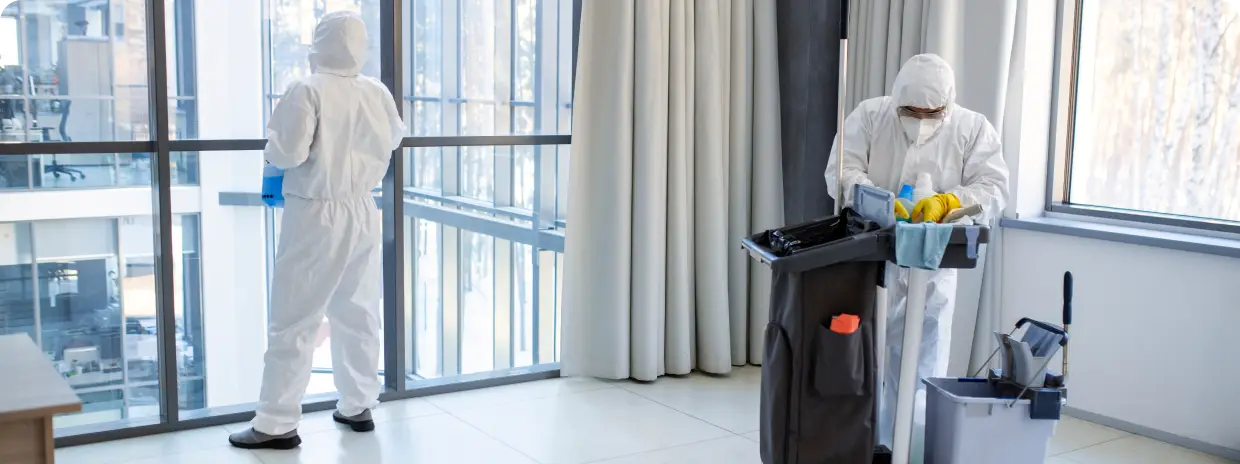
Personal protective equipment is mandatory where identified by risk assessment. Typical requirements for builders clean tasks include high-visibility clothing, safety boots, gloves, eye protection, and respiratory protection for dusty environments. Equipment must be inspected before use and maintained in a safe condition. The following list summarises common PPE and equipment expectations:
- Hand protection: cut-resistant gloves for debris handling.
- Respiratory protection: masks or respirators for dust and fine particulate.
- Footwear: sturdy, slip-resistant safety boots.
- Tools and machines: vacuum systems, scrubbers and ladders inspected and used with correct training.
 Training, competence and supervision are essential. All operatives must be trained in safe manual handling, the correct selection and use of PPE, and the safe operation of cleaning machinery. Supervisors should monitor performance, deliver refresher instruction when necessary, and ensure that only competent personnel undertake tasks such as working at height, operating power equipment or handling hazardous materials encountered during post-construction cleans.
Hazardous Substances and Waste Management
Chemicals commonly used in after-build cleaning, such as solvents, strong detergents and adhesive removers, must be stored, used and disposed of in accordance with manufacturer guidance and site procedures. Control measures include using safer alternatives where possible, providing adequate ventilation, and using appropriate gloves and eye protection. Waste segregation and removal of construction debris, including sharp objects and hazardous remnants, must be undertaken to minimise secondary risks to staff and subsequent occupants.
![A woman with short brown hair, wearing black-rimmed glasses, a white t-shirt, and yellow rubber gloves, is carefully cleaning a wall in a bright, well-lit residential space. She is using an orange cloth to wipe the surface, which appears smooth and painted in a light yellow or beige colour. The background features large windows that allow natural daylight to fill the room, illuminating the scene and highlighting the pristine, dust-free condition of the area. The setting suggests a focus on interior cleaning or preparation for decorating, aligned with professional cleaning services such as those provided by After Builders Cleaning in the UK. The room appears tidy, with clean, polished surfaces, and an airy atmosphere typical of post-renovation or deep cleaning tasks in homes around [POSTCODE] or [TOWN], supporting local SEO relevance. The woman's professional cleaning attire and focused action reflect quality standards catered to residential cleaning needs in the local area.](/pub/_photos/cleaning/f1308442624.jpg) Monitoring, reporting and continual improvement are embedded in this policy. Regular site inspections, toolbox talks and safety observations help identify trends and areas for improvement. Any near-miss or unsafe condition should be recorded and addressed promptly so corrective actions reduce the likelihood of recurrence. Performance measures will include records of training, inspection outcomes and incident statistics to drive better practice across post-build cleaning projects.
Monitoring, reporting and continual improvement are embedded in this policy. Regular site inspections, toolbox talks and safety observations help identify trends and areas for improvement. Any near-miss or unsafe condition should be recorded and addressed promptly so corrective actions reduce the likelihood of recurrence. Performance measures will include records of training, inspection outcomes and incident statistics to drive better practice across post-build cleaning projects.
![A professional cleaner wearing purple disposable gloves is cleaning a window with a spray bottle and a blue microfiber cloth. The window consists of multiple square panes separated by white frames, and the cleaner is wiping the glass surface carefully. The background includes a wooden surface, possibly part of a kitchen or bathroom, indicating a residential or commercial space in the UK, potentially within the postcode area of [POSTCODE], near [TOWN]. The cleaning process appears thorough, focusing on removing smudges or dirt from the window surface. This detailed cleaning activity is typical of after builders cleaning services offered by companies such as After Builders Cleaning in the UK, aimed at ensuring a safe, spotless environment in homes or commercial properties, consistent with health and safety standards mentioned in their policy page. The scene is well-lit, emphasizing the clarity and cleanliness of the window, reflecting professional attention to detail in exterior or interior window maintenance.](/pub/_photos/cleaning/f3383918592.jpg) Emergency arrangements include clear procedures for first aid, fire response, chemical spills and evacuation. Teams must know the location of first aid equipment and the names of designated first aiders. Where necessary, site-specific emergency plans will be prepared and shared prior to starting work, ensuring that everyone understands escape routes, assembly points and reporting lines for incidents during the builders clean process.
Emergency arrangements include clear procedures for first aid, fire response, chemical spills and evacuation. Teams must know the location of first aid equipment and the names of designated first aiders. Where necessary, site-specific emergency plans will be prepared and shared prior to starting work, ensuring that everyone understands escape routes, assembly points and reporting lines for incidents during the builders clean process.
Incident Reporting and Investigation
All accidents, incidents and near-misses must be reported without delay. Prompt reporting allows for timely first aid, investigation and remedial action. Investigations focus on identifying root causes and implementing practical measures to prevent recurrence, rather than attributing blame. Records of incidents and outcomes are maintained to inform future risk assessments and training needs.
Communication and teamwork are vital. Staff are encouraged to raise safety concerns and to participate in safety briefings. A positive safety culture supports open discussion of hazards and ideas for improvement. Supervisors will ensure that policy updates, procedural changes and safety messages are communicated clearly and effectively across all teams engaged in post-construction cleaning.
Review and revision of this Health and Safety Policy occur regularly to reflect changing work practices or new information on hazards. The policy is a living document: it will be evaluated after significant incidents, project completion, or when new equipment and methods are introduced. The shared objective is to deliver high-quality after builders cleaning while protecting the health and safety of workers and clients alike.
Commitment and Implementation
This policy represents a commitment to safe, responsible and professional post-construction cleaning operations. Management will allocate the necessary resources to implement the arrangements described, ensuring staff receive appropriate support, training and equipment to carry out builders clean activities safely. All personnel involved in after-build cleanup are required to follow the practices laid out in this policy and to participate in ongoing improvement efforts.
The success of the policy depends on co-operation at every level. By working together to identify hazards, apply suitable controls and communicate concerns, teams will reduce risk and maintain a safe working environment throughout the life of each post-build cleaning project.
Signed and adopted as the operational Health and Safety framework for post-construction and after builders cleaning duties, this policy sets the standard for safe practice and continuous improvement.